A Complete Guide to Jaw Crushers: Working Principles, Types, Applications, and Laboratory Importance
INTRODUCTION:In the world of material processing and laboratory sample preparation, size reduction is the foundation of accurate analysis. Before any meaningful testing, characterization, or further processing can occur, bulky raw materials must be reduced to manageable, uniform sizes. This is where the jaw crusher proves indispensable.
A jaw crusher is not merely a crushing machine—it is the first and most critical stage in material size reduction. From mining operations and construction sites to research laboratories and recycling plants, jaw crushers play a vital role in ensuring efficiency, consistency, and accuracy in downstream processes.
At Sylab Scientific, jaw crushers are engineered with a deep understanding of laboratory and industrial demands, combining mechanical strength, precision engineering, and long-term reliability.
What Is a Jaw Crusher?
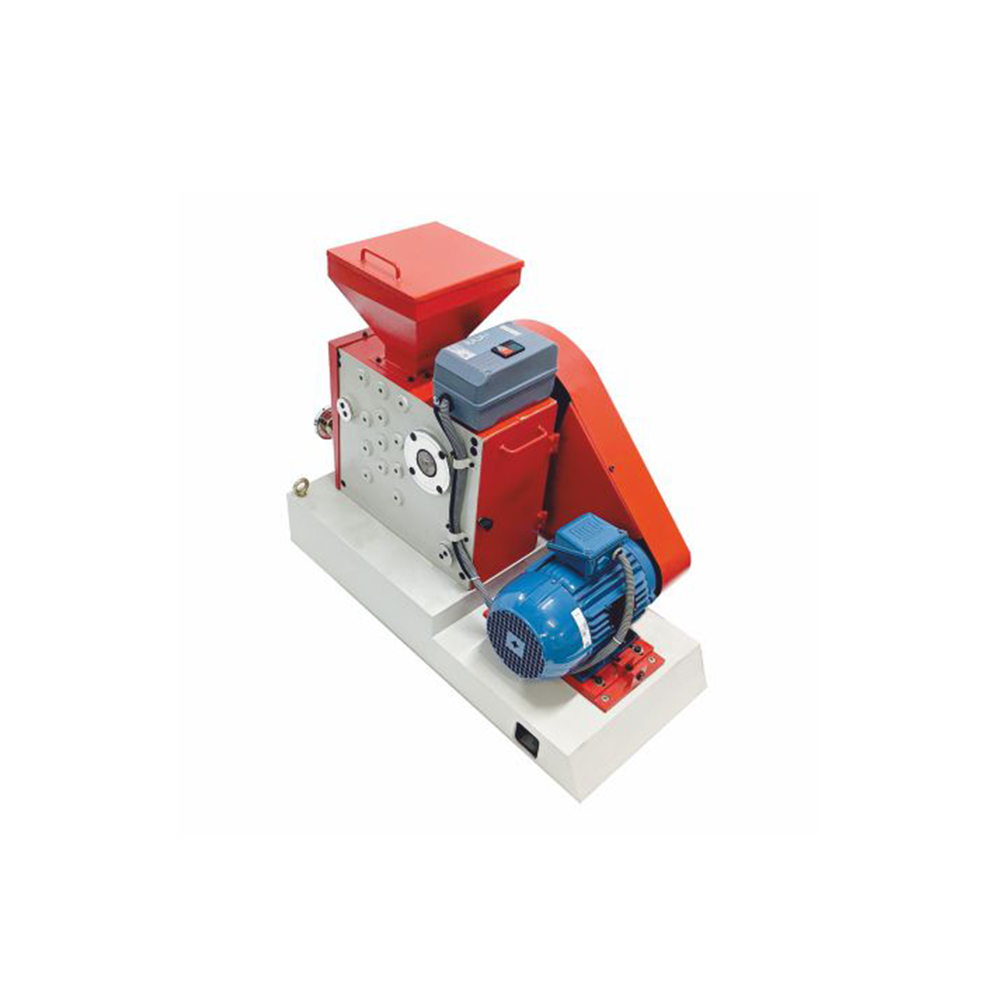
A jaw crusher is a heavy-duty mechanical device designed to crush large, hard, and abrasive materials into smaller fragments through compressive force. It consists of two rigid plates (jaws)—one stationary and one movable—that form a V-shaped crushing chamber.
Jaw crushers are widely used as primary crushers, meaning they are typically the first machine used to break down raw material before secondary or tertiary crushing processes.
Key characteristics include the ability to handle hard and brittle materials, reduce large feed sizes efficiently, produce consistent and repeatable output, and operate across laboratory-scale to industrial-scale applications.
How a Jaw Crusher Works
The working principle of a jaw crusher is elegantly simple yet mechanically powerful. It relies on compression rather than impact or shear forces.
Step-by-Step Crushing Process
The process begins with feeding the material. Raw material such as rocks, ores, slag, concrete chunks, or solid laboratory samples is introduced into the crusher via a feed hopper. The wide feed opening allows bulky materials to enter without the need for pre-breaking.
Inside the crushing chamber, the crushing action takes place. The fixed jaw remains stationary and provides a solid surface, while the moving jaw oscillates back and forth through an eccentric shaft powered by an electric motor. As the moving jaw approaches the fixed jaw, material is compressed and fractures along natural fault lines. When the jaw retracts, crushed particles fall further down the chamber, where the process repeats.
Discharge occurs once the material reaches a size small enough to pass through the adjustable discharge gap at the bottom of the crusher. The crushed material then exits the machine, ready for secondary crushing, milling, sieving, or laboratory testing.
Types of Jaw Crushers
Selecting the correct jaw crusher depends on material hardness, feed size, throughput requirements, and the intended application.
Single Toggle Jaw Crusher
Single toggle jaw crushers operate using a single eccentric shaft to drive the moving jaw. Their simple mechanical design features fewer components, making them easy to operate and maintain. These crushers are ideal for laboratories, educational institutions, pilot plants, and small-to-medium industrial setups where moderate crushing force is sufficient.
Double Toggle Jaw Crusher
Double toggle jaw crushers employ two shafts and toggle plates, creating higher mechanical leverage and stronger crushing force. This design is better suited for hard and abrasive materials and continuous heavy-duty operation. Double toggle crushers are commonly used in mining operations and large-scale industrial processing plants.
Key Features of a Jaw Crusher
Modern jaw crushers are engineered to deliver high performance while maintaining durability and operational efficiency.
They offer high crushing capacity, enabling them to process large volumes of hard material with consistent output. The adjustable discharge gap allows precise control over final particle size, which is essential for laboratory testing and material processing.
Robust construction using high-strength steel or cast iron ensures long service life, even under abrasive and demanding conditions. The simple mechanical structure keeps operating and maintenance costs low, while compact laboratory models make jaw crushers suitable for limited workspace environments.
Applications of Jaw Crushers
Jaw crushers are widely used across multiple industries due to their versatility and reliability.
In mining and metallurgy, they are used to crush ores before mineral separation and sample analysis. In construction and demolition, jaw crushers process concrete, bricks, rubble, and aggregates efficiently. Laboratories and research institutions rely on jaw crushers for preparing solid samples for XRF, XRD, ICP, and other analytical techniques.
Recycling plants use jaw crushers to reduce metal scraps and industrial waste, while ceramic and glass industries depend on them to crush raw minerals and materials prior to thermal processing.
Why Every Laboratory Needs a Jaw Crusher
In laboratory environments, accurate sample preparation directly impacts analytical reliability. A jaw crusher ensures samples are reduced to consistent and representative particle sizes.
Uniform particle size is essential before chemical, physical, or mineralogical analysis. Jaw crushers handle real-world materials such as granite, quartz, basalt, slag, and concrete without compromising performance.
By producing consistent particle sizes, jaw crushers improve analytical precision, reduce sampling errors, and enhance test reproducibility. Compared to manual crushing, they significantly save time, reduce labor, and improve safety.
Jaw crushers are versatile tools for research laboratories, quality control departments, educational institutions, and pilot-scale material testing facilities.
Maintenance Tips for Long-Term Performance
To maintain optimal performance and extend service life, jaw crushers should be cleaned after each use to prevent material buildup. Jaws, bearings, and fasteners should be inspected regularly for wear or damage. Moving parts must be lubricated according to manufacturer recommendations, and the discharge gap should be periodically calibrated to ensure accurate output size.
When not in use, the crusher should be stored in a dry, dust-free environment.
Common Jaw Crusher Issues and Solutions
Uneven output size is typically caused by an incorrect discharge gap and can be resolved by proper adjustment. Excessive vibration often results from loose bolts or worn bearings and requires tightening or replacement. Overheating is usually due to poor lubrication and can be corrected by checking and replenishing lubricant levels. Material buildup is commonly caused by sticky or wet feed material and can be prevented through regular cleaning and moisture control.
Conclusion
A jaw crusher is more than a crushing machine—it is the foundation of effective material processing and reliable laboratory testing. From reducing hard ores to preparing precise analytical samples, jaw crushers ensure consistency, efficiency, and long-term performance.
By selecting the appropriate jaw crusher, understanding its operation, and following proper maintenance practices, laboratories and industries can achieve accurate results, minimal downtime, and extended equipment life.
For ISO-certified jaw crushers and advanced material testing equipment, Sylab Scientific remains a trusted partner in laboratory precision, durability, and performance.